
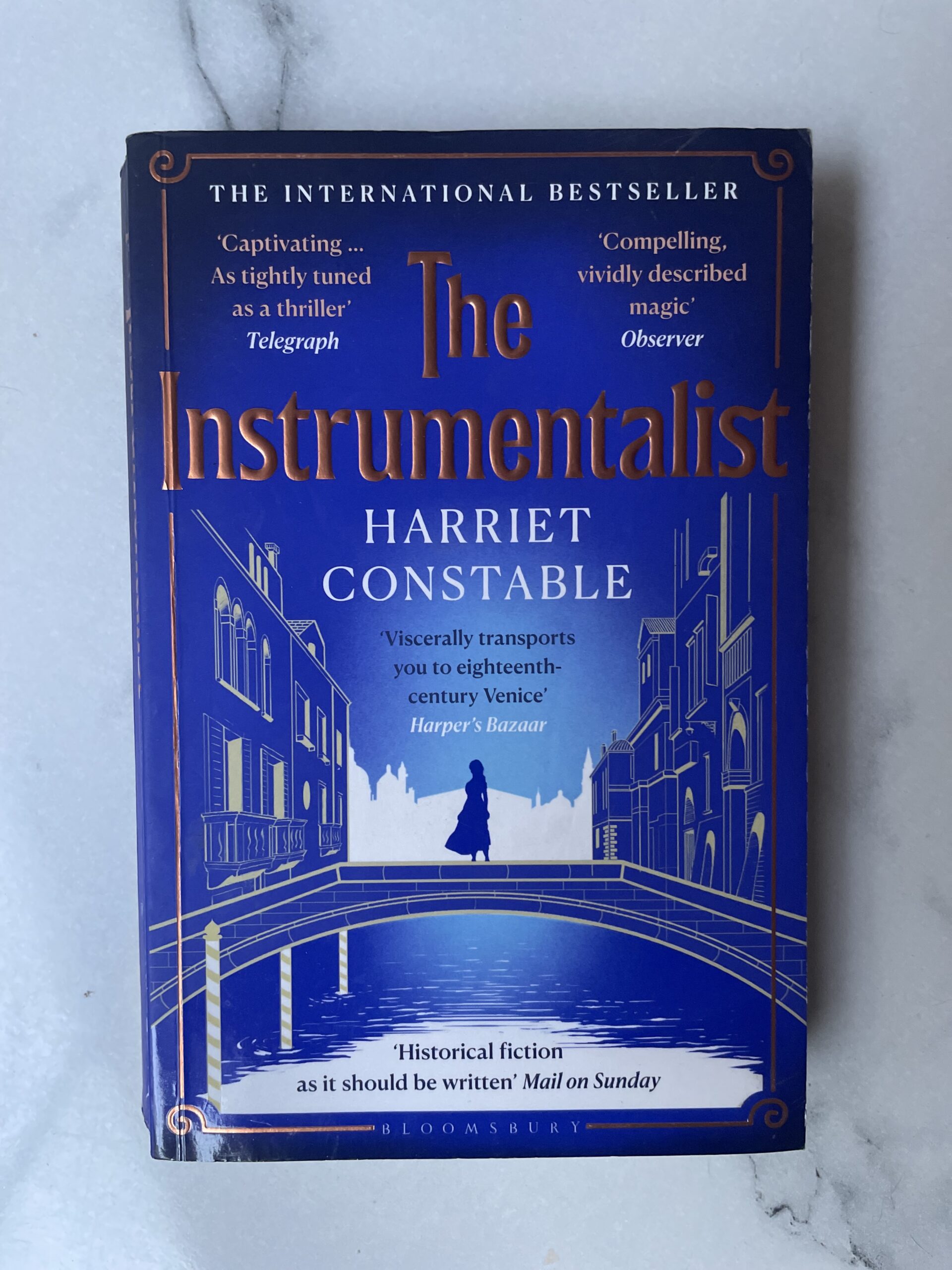
“The Instrumentalist” by Harriet Constable follows the rise of Anna Maria, an orphan girl who is almost drowned by her mother as a baby before being “posted” through a hole in the wall of the Ospedale della Pietà in 1696. The Pietà, a Venetian orphanage for young girls, is famous for its music and Anna Maria finds she has a natural affinity for the violin. She soon finds herself taking violin lessons with Vivaldi himself. Anna Maria joins the figlie di coro, the “daughters of the choir”, an orchestra of orphan girls widely regarded at the time as the best orchestra in the republic.
The orphan girls in “The Instrumentalist” inspired Vivaldi’s greatest musical triumphs but remain unacknowledged. Until now.
Anna Maria della Pietà doesn’t just hear music, she sees it in full colour. Perched in a window ledge with her dear friends, Paulina and Agata, Anna Maria conducts the scene unfolding outside the fifth floor widow of the Pietà, “And now, cue the colours… the blues and yellows and greens and reds… a kaleidoscope of a world explodes before her eyes. Tones and hues float up, high above the city, hanging like notes on a stave, matching the sounds below.” It is as if music and sound itself becomes an animate character in the story, with the ability to move and change the reader as it does Anna Maria throughout the novel.
“This girl had notes before she had words, and those notes have always had colour.” Harriet Constable, “The Instrumentalist”
One thing that Anna Maria is sure of is that she must make something of herself in order to avoid the murky unspoken threat hovering over the orphanage, where girls often “disappear” once they come of age. The only way to be safe is to be the best, and this is what Anna Maria becomes. She must be “destined for greatness” in order to survive.


After fighting her way into the figlie di coro as its youngest member, the next step is to be recognised as “Maestro” and then to begin composing her own works. But Anna Maria has no idea of the obstacles ahead, nor that the worst of these will come from those she has learned to rely on and to trust.
The Instrumentalist is a proto-feminist reimaging of a life that deserves to be remembered.
Harriet Constable is an award winning journalist and film maker who was named as one of the ten best new novelists for 2024 by the Guardian for her international best-selling debut, “The Instrumentalist”.
Harriet Constable has created something very beautiful in her debut novel. The fact that Vivaldi is never named hints, almost like revenge, at the unnamed girls in the figlie di coro who not only played but may have inspired and even contributed creatively to his music. These orphans had great courage and, for many of us, their struggles are as relatable today as they were to the unknown women fighting for survival in eighteenth century Venice.
The Instrumentalist: Suggested Book Club Questions
- The historians Harriet Constable consulted stated that they couldn’t rule out the Pietà girls contributing to Vivaldi’s compositions, and she based the novel’s central theory on that gap. Where’s your line between plausible speculative history and rewriting the record — and did the book stay on the right side of it for you?
- Readers have said one of the most powerful aspects of the story telling in The Instrumentalist centers around the portrayal of music and sound as a character in itself. Do you agree? How did you feel about the use of musical and artistic imagery in the book?
- The novel intends to recover the overlooked female “orphans of Venice” behind the celebrated music of eighteenth century Venice. Around whose story do you believe the book actually centered? Anna Maria’s, or Vivaldi’s, told through her eyes?
Join the Inner Circle to receive thoughtful stories, curated book ideas, and quiet inspiration – gathered with care and shared nowhere else. It’s time to fall in love with books again, and reclaim the art of an unhurried mind.