
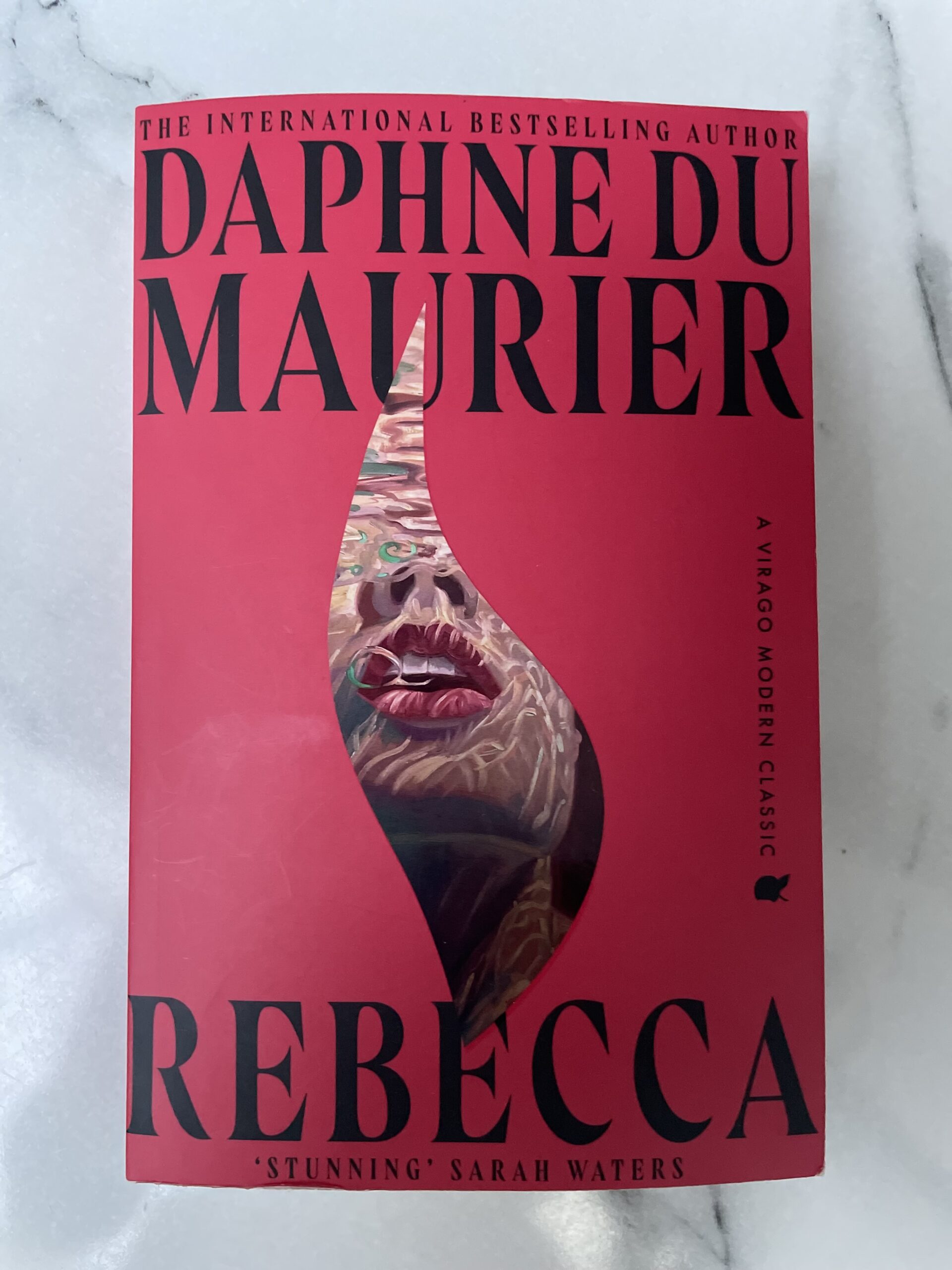
Daphne du Maurier’s prose is a masterclass. Literary excellence ran in her blood and, since she was a child, she and her sister amused themselves by writing and sharing their stories. Her father, Sir Gerald du Maurier, was an actor and her grandfather, George du Maurier, was a writer and cartoonist. Some of her first published work appeared in her great-uncle’s magazine, “Bystander”.
In “Rebecca” we see the darker side of Daphne du Maurier’s self perception.
Daphne du Maurier pours two opposing aspects of herself into her masterpiece, Rebecca. She is both the capable and confident Rebecca, and the timid and reclusive protagonist, thrust into social circles she does not know how to navigate. Daphne du Maurier explores the subtleties of English society and the mechanics of fear and desire that we can all relate to. But the most striking feature of “Rebecca” is the fact that the true protagonist remains unnamed throughout the novel. It is a brilliant structural deceit, deftly executed, that speaks to the reader of the protagonist’s invisibility and her lack of a sense of self.
We find ourselves as captivated by, fearful- and deeply jealous of Rebecca as the protagonist is.


Rebecca is set in the fictional Manderley, an estate in Cornwall, England, that is as much a character in the novel as it is the setting for the twists and turns that follow. The novel follows the life of the protagonist in her marriage to the cold and taciturn Max de Winter, after the death of his wife. She is no social match for her new husband and is consumed by jealousy and fear of a woman she has never met: his late wife, who was everything she is not. She is the new Mrs de Winter, but the reader will never learn her true name. It is as if she exists as a mirror of others, rather than as a unique entity in and of herself.
“‘Mrs M de Winter’ it said, and in the corner ‘Manderley’. I put it back in the box again, and shut the drawer, feeling guilty suddenly, and deceitful, as though I were staying in someone else’s house and my hostess had said to me, ‘Yes, of course, write letters at my desk.’” Daphne du Maurier
Manderley was inspired by a coastal estate Daphne du Maurier visited in Cornwall as a child. Her personal experience of the area significantly shaped the novel’s setting and the emotions she is able to conjure with her intimate knowledge of a devastatingly beautiful part of our coastline. She wrote Rebecca when she was away from home with her husband and missed the rugged coastline where she had holidayed for most of her life. She longed to return to the place where she felt inspired and did eventually relocate to Menabilly, Fowey, with her family. She renovated the house and made it her home until 1969. Cornall was the setting for many of her books, but it was “Rebecca” that brought the mystery and intrigue of the place the author loved, alive.
“I can close my eyes now, and look back on it, and see myself as I must have been, standing on the threshold of the house, a slim, awkward figure in my stockinette dress, clutching in my sticky hands a pair of gauntlet gloves.” Daphne du Maurier
Daphne du Maurier was born into privilege and was easily as capable and impressive as her character Rebecca, with sailing and horse riding amongst her favourite pastimes. However, she also understood what it meant to be intimidated and envious of the social graces of those around you… to want to disappear rather than to take part in the strain of performing a social dance outside of one’s comfort zone.
“Daphne du Maurier created a scale by which modern women can measure their feelings” Stephen King on “Rebecca”
Daphne du Maurier’s husband, Lieutenant-General Frederick Browning, was knighted in 1947 and she became Lady Browning, with all the attendant responsibilities of socialising with royalty while upholding the strained etiquette expected of the upper most classes of England. She wrote of feeling out of her depth in royal circles and, in many ways, she could relate to her protagonist’s feeling of never quite measuring up.
As it turns out we, too, can relate.
Rebecca: Suggested Book Club Questions
- Daphne Du Maurier never gives her narrator a first name. While Rebecca’s is used constantly, the second “Mrs. de Winter” never gets one. What does that erasure do to how you read her identity, and did you find yourself wanting to name her?
- Maxim de Winter has been considered one of the most overrated lead characters in recent English literature. How do you feel about his character? Can you understand what the narrator sees in him?
- Once Maxim confesses the truth about Rebecca, many readers report their sympathy shifting completely, with some even reading Maxim as the real villain of the book. Where did you stand? Is Maxim a wronged man, or does the novel ask us to forgive too much?
Join the Inner Circle to receive thoughtful stories, curated book ideas, and quiet inspiration – gathered with care and shared nowhere else. It’s time to fall in love with books again, and reclaim the art of an unhurried mind.