
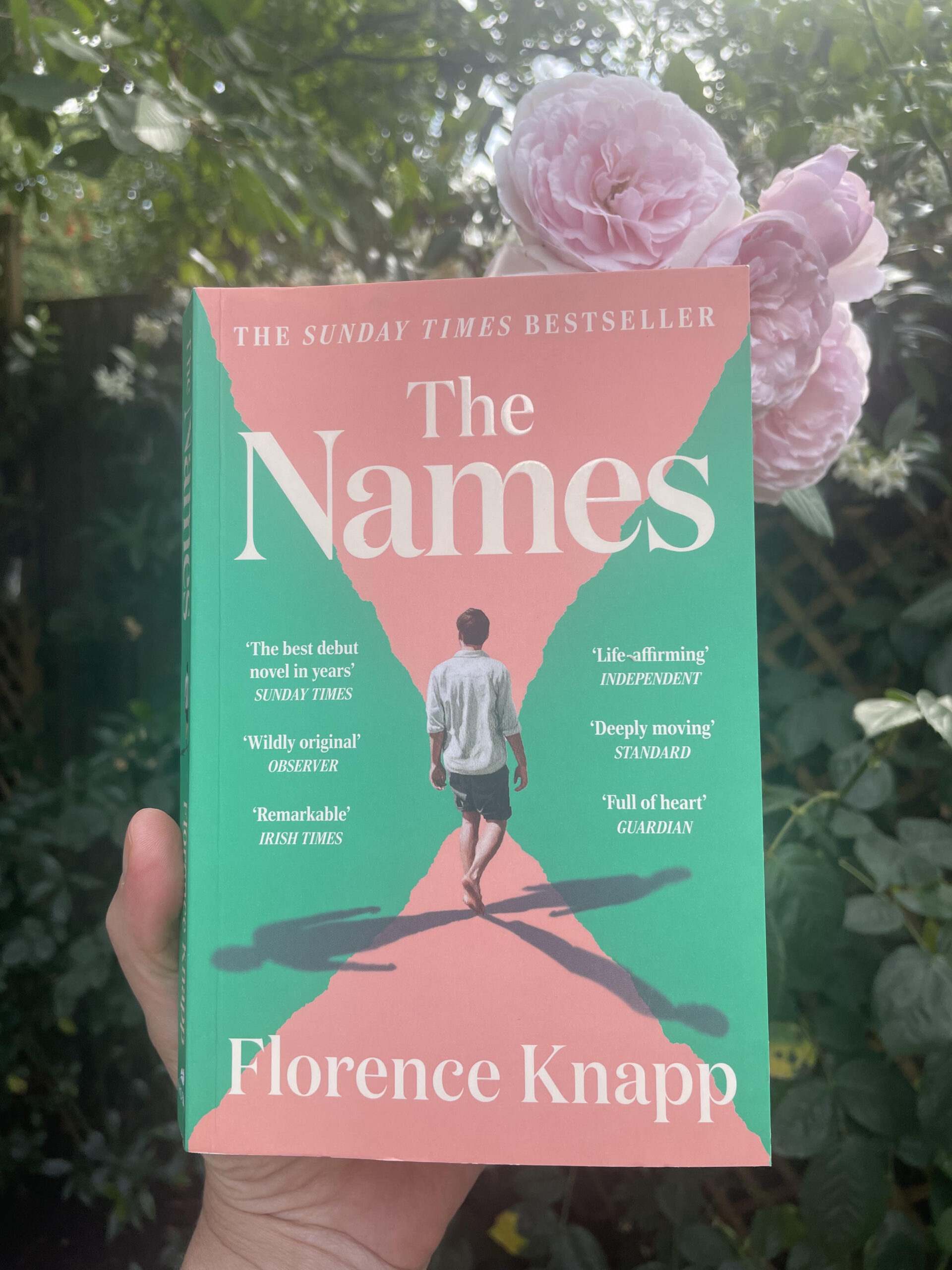
“The Names” by Florence Knapp was described as “The best debut novel in years” by the Sunday Times and “the most devastating book you will read this year” by The Observer. It was a Sunday Times Bestseller, and it will break your heart.
In “The Names”, Florence Knapp explores identity, destiny and abuse with tenderness of heart and artisanal skill.
Cora is a mother who was once a dancer… a woman who has not only lost her sense of personal identity, but her trust in herself. The novel explores, with a nod to “Sliding Doors”, the impact of Cora’s choice of name for her son on his personality, his hopes and his future. She has good reason for her fear in making this choice. We discover why as we walk tenderly through the various permutations of her family’s future, discovering how the choice not only impacts her own family, but the lives of all those they touch. We find ourselves wondering if “The Names” is about the choice of a name, or about everything that led to that choice as well as the events that resulted from it.
“She takes a breath, as though she’s about to ask something forbidden, ad then says, ‘Why does it matter? To Dad, I mean. This same-name thing.’” Cora’s daughter Maia, in “The Names”


Cora’s husband, Gordon, expects her to name their son after him as his father did before him. But, for reasons that will become clear, Cora does not want her son to follow in her husband’s footsteps, and is considering breaking away from his wishes. In one version of events, she chooses a name that is the very spirit of her son and allows him to grow into a version of himself that is impossible not to love. The second version shows him navigating the world as most of us do… discovering who he is by trial and error. In the third, Cora names her son after his father, and bears the bulk of the consequences herself.
We find ourselves wondering about fate, destiny and the choices we ourselves have made.
Each of these versions of the story hold the truth of life. They speak of the pain and consequences none of us can avoid if we are to truly live. They express the beauty of snatched moments in life that are searing in their truth and the loss. Oh, the loss… of love, life, freedom, opportunities and time that will not stop in its relentless progress towards what lies ahead.
Florence Knapp allows her characters to explore their own beautiful arc of development and, as water returns to the sea, we journey with them and feel their journeys as deeply as we experience our own.
The Names made me cry so that I had to put the book down and weep. For the characters’ pain, and for how tenderly theirs touched upon my own.
If the role of a beautifully crafted novel is to make the reader feel seen… to help them walk through their own loss, their own pain, so carefully and so gently that they know they are not alone… then the role of the reader is to allow this: to read the prose with the tender care with which it was written, so that together we – reader and writer – may heal each other.
Florence Knapp achieves this with delicate artistry in The Names. She walks with each of the characters through the various versions of their lives – for the choice of name affects them all – and observes, with the eye of a parent and the tender words of a poet, what she sees. It is utterly unique. Not attempting to be anything other than what it is: A love song to anyone who has walked through abuse in any form. A tender poem of the heart, to us all.
The Names: Suggested Book Club Questions
- Cora’s choice of name is presented as a small, private act with enormous consequences. Do you think the novel is really about names — or is the name simply a stand-in for the larger, harder choices Cora is or isn’t able to make on that day?
- Each version of the son inherits something different from his three possible names. Which of the three lives did you find yourself most invested in, and did your loyalties shift as the book went on?
- The novel checks in on its characters roughly every seven years rather than following them continuously. What did that structure allow the author to do that a conventional, linear narrative couldn’t?
Join the Inner Circle to receive thoughtful stories, curated book ideas, and quiet inspiration – gathered with care and shared nowhere else. It’s time to fall in love with books again, and reclaim the art of an unhurried mind.